VISIT OUR FACEBOOK PAGE!
The Greek Septuagint: How the Hebrew
Bible Learned to Speak Greek
The Greek Septuagint was the dominant Old Testament version during the Apostolic period. It's what Christ and His disciples would have read and studied from during His ministry — which alone makes it one of the most consequential translations in human history, even before you get into the stranger corners of its story.
What "Septuagint" Actually Means
The name comes from the Latin septuaginta, literally "seventy," often abbreviated as 70 in Roman numerals — LXX. The Greek Septuagint is the earliest surviving Greek translation of the Hebrew Bible, and it holds that title by a wide margin. Nothing else from antiquity comes close to matching its scope or its influence.
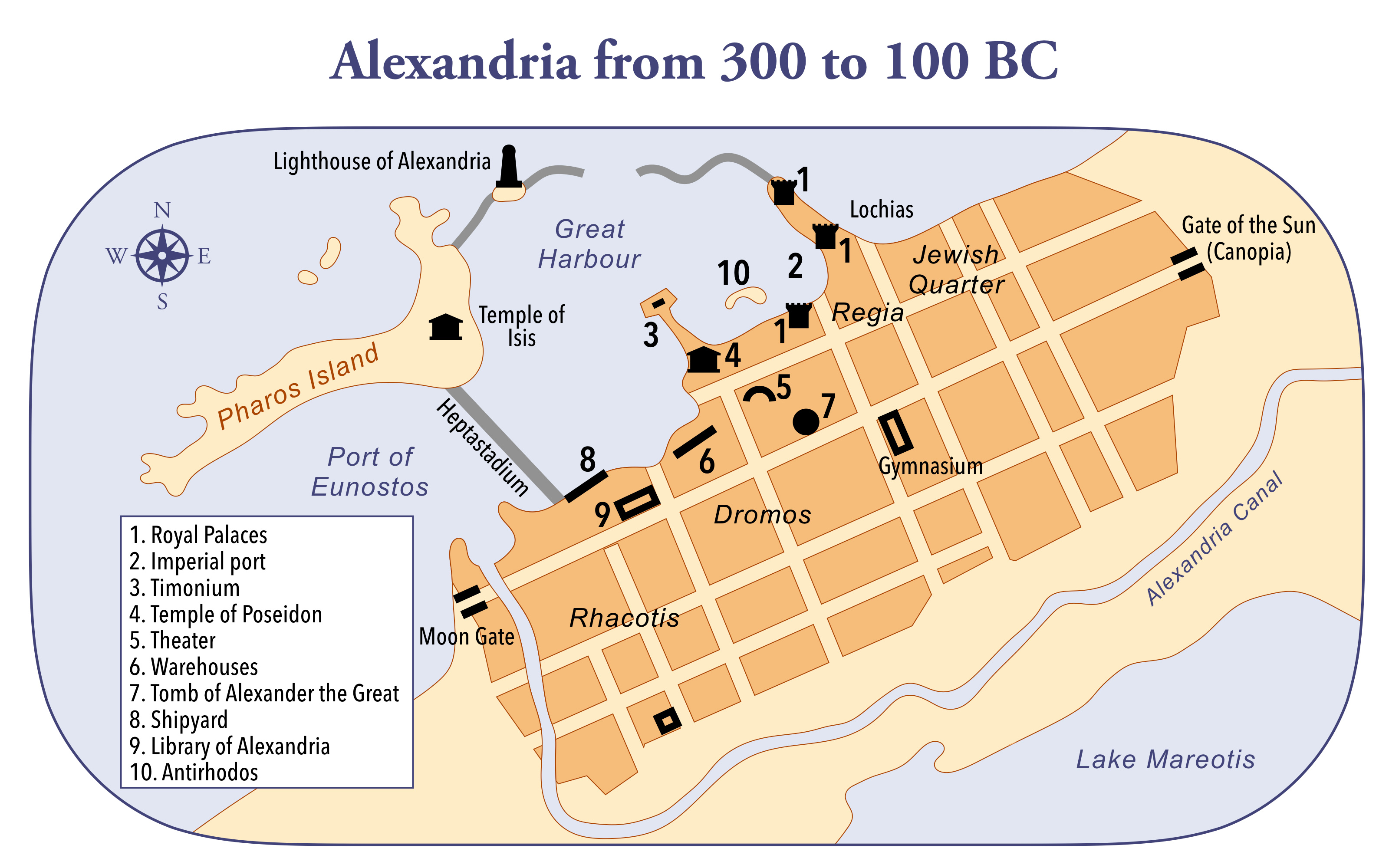
It was written in Alexandria, Egypt, a city that was home to an enormous Jewish population during the Hellenistic and Roman eras — estimates put it as high as 35% of the city's residents at the height of that community.
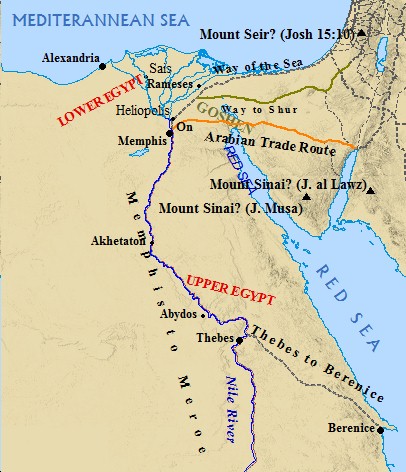
That number becomes almost jarring when you set it against the present: as of 2017, official counts from the leaders of Egypt's remaining Jewish community recorded only 12 Jews as still living in Alexandria, the tail end of a community that once rivaled Jerusalem itself in size and scholarly output.
Alexandria wasn't a random choice of location. It was, at the time, the intellectual capital of the Mediterranean world — home to the Great Library, a magnet for scholars of every background, and a place where Greek had become the practical language of commerce, philosophy, and daily life for Jews who'd been settled there for generations and had begun losing fluency in Hebrew.
Translating the Torah into Greek wasn't an act of scholarly curiosity so much as a necessity — an entire generation was at risk of losing direct access to its own scripture.
The LXX: A Project Centuries in the Making
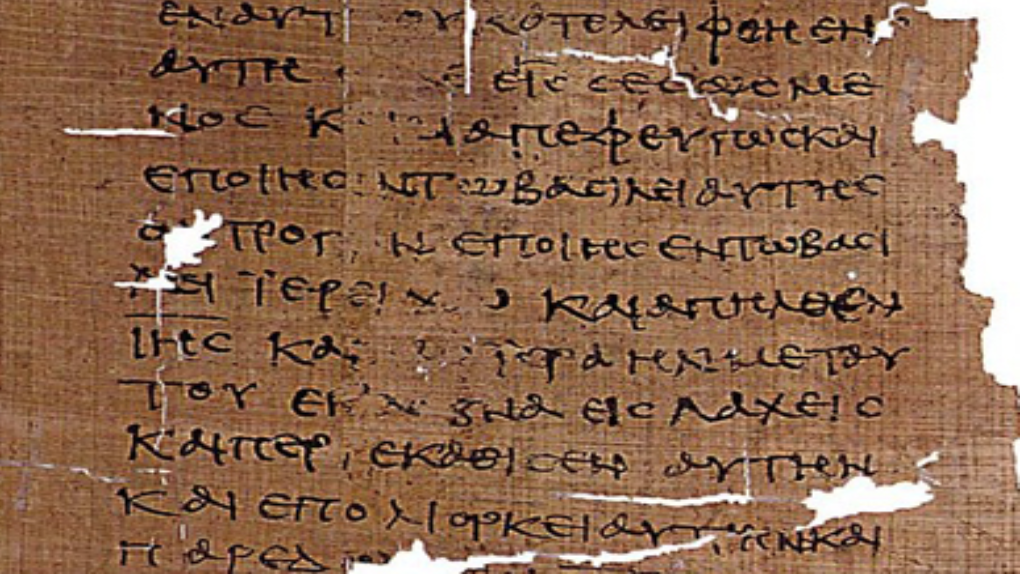
The LXX project began in the 3rd century B.C.E. and wasn't finished until sometime before 132 B.C.E. — meaning the full translation, covering not just the five books of Moses but the wider body of Hebrew scripture, took well over a century to complete.
It stands as the oldest of several Greek versions of the Old Testament that circulated in the ancient world, and its origins trace back to the era of Alexander the Great, whose conquests had spread Greek language and culture across the entire eastern Mediterranean in the first place — the very condition that made a Greek Bible necessary.
The Legend of the Seventy-Two Elders
No account of the Greek Septuagint is complete without its founding legend, and it's a genuinely strange one. According to the Talmud, King Ptolemy placed 72 Jewish elders in 72 separate chambers, deliberately keeping them apart and in the dark about why they'd been summoned.
He then went from room to room, instructing each elder individually to write down the "Torah of Moshe, your teacher."
The punchline of the story is the part that made it legendary: when the translations were compared afterward, every single version was reported to be identical, word for word — evidence, according to the tradition, that God had placed the same words into each elder's heart independently.
Whatever you make of the miracle claim, the legend itself tells you something real about how seriously later Jewish tradition took the project's authority. This wasn't viewed as one man's translation choices; it was framed as something closer to a second revelation.
That reverence, though, wasn't uniform across every part of the finished work. Though the later books of the Septuagint have drawn criticism over the centuries — for looser translation choices, expansions, and occasional theological drift from the Hebrew — the five books of Moses, the Pentateuch, has been highly regarded as an accurate and careful translation since antiquity.
It was, quite literally, the first time the Hebrew Old Testament had ever been rendered into another language, making it the "English" of its era — the common tongue through which an entire diaspora could finally read its own foundational texts.
The Greek Septuagint & The Nephilim - click to publish your article!
Why the Greek Septuagint Translators Made the Choices They Did
It's worth pausing on just how difficult a task this actually was. The 3rd century B.C.E. translators weren't working from dictionaries, grammars, or prior Greek renderings of any of this material — there was no precedent to lean on.
Every technical term, every idiom, every piece of Hebrew poetry had to be reasoned through from scratch, often by committee, and often under real theological pressure to get it right. Modern scholars who compare the LXX against the Masoretic Text still argue over individual word choices almost 2,300 years later — a testament to how carefully, and how contestably, that original work was done.
Trusted by Philosophers, Quoted by Apostles
Philo and Josephus, two of the most significant Jewish writers of the Hellenistic period, both regarded the Septuagint as divinely inspired — not merely a useful translation, but scripture in its own right. That status wasn't confined to Judaism, either.
The Old Armenian, Old Georgian, Syriac, and Slavonic Old Testaments all trace their roots back to the Septuagint rather than to the Hebrew directly, meaning the LXX effectively became the mother text for entire branches of world Christianity that never touched a Hebrew scroll.
It's also quoted throughout the New Testament and was held in extremely high regard by the early Church Fathers, many of whom had little or no access to Hebrew manuscripts and treated the Greek as their working Old Testament by default.
This is where the Septuagint gets genuinely interesting for anyone digging into the more mysterious corners of Genesis — because the LXX has striking things to say about the Nephilim.
The Septuagint and the Nephilim
The Septuagint leaves no room for debate on one particularly loaded phrase: bene elohim, from Genesis 6, is translated in the LXX as "angels of God." These are the words Christ and His disciples would have read, which means it logically follows that they would have understood the Nephilim to be, in some sense, half-divine beings — offspring of a union between heavenly and human.
That reading wasn't a fringe position among ancient interpreters, either. The ancient scholars and Church Fathers had comparatively little trouble believing angels had descended from heaven and taken human wives. William F. Albright captured this directly in From the Stone Age to Christianity, writing that the Israelites who originally heard Genesis 6:2 recited "unquestionably thought of intercourse between angels and women."
Philo of Alexandria took the idea seriously enough to devote an entire treatise to it, Concerning the Giants, building his argument directly on the Septuagint's wording. In it, Philo translates the phrase exactly as the LXX does — "angels of God" — while noting that the word "angel" could refer to both good and fallen beings, much as the word "soul" can describe either righteous or wicked people.
Philo insisted the Genesis 6 account was historical rather than mythical, and that its purpose was to teach that some men are "earthborn," others "heaven-born," and the greatest of all "God-born."
From Nephilim to Gegenes
There's a second translation choice in this same passage that's easy to miss but says just as much: the Septuagint renders "Nephilim" as Gegenes. The Jewish elders responsible for the LXX were writing for a Greek-speaking audience steeped in Greek mythology, and that context makes the word choice pointed rather than incidental.
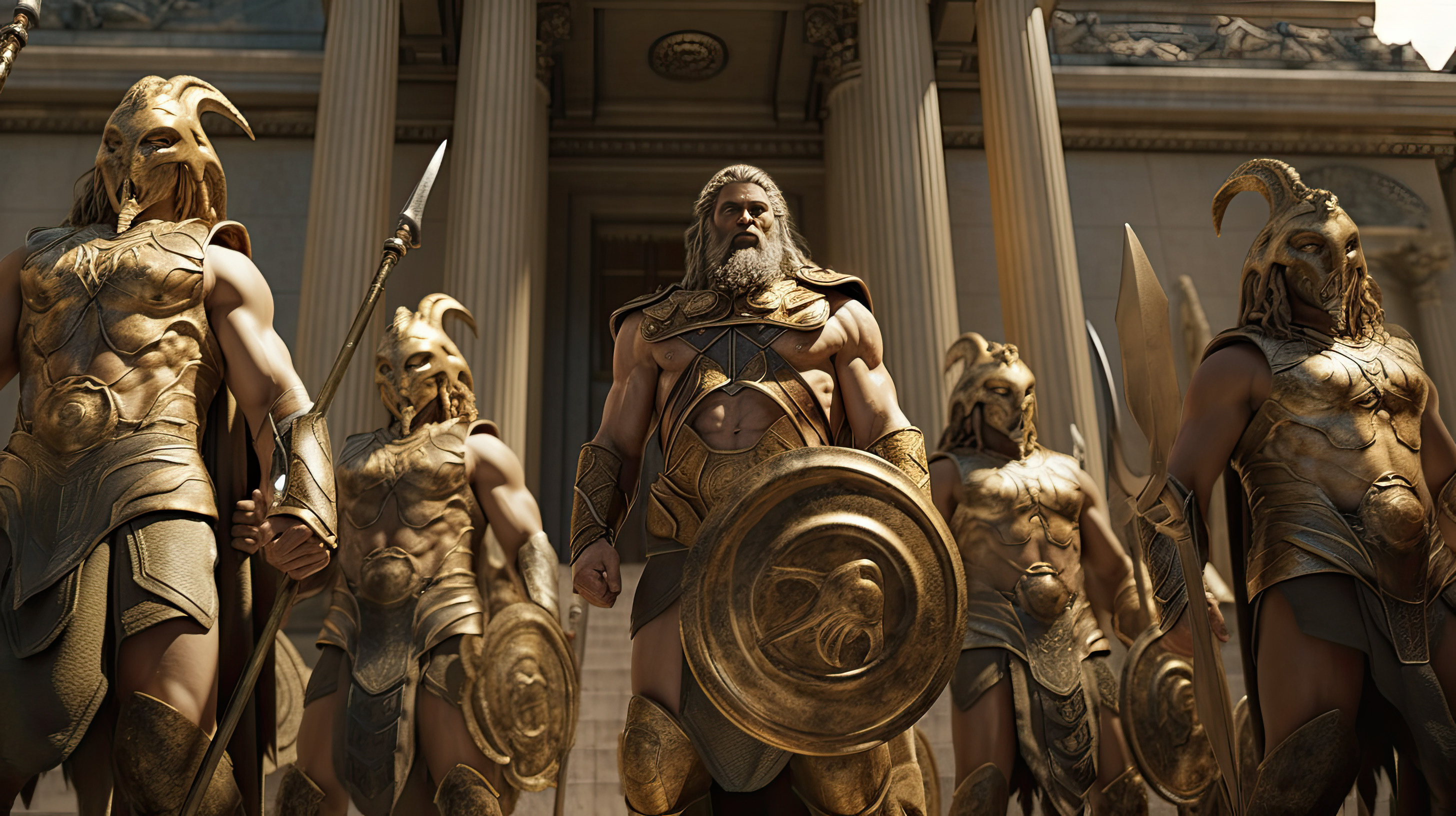
In Greek myth, the Gegenes — the Titans — were powerful, primordial deities who ruled during the mythical Golden Age before being overthrown by the Olympians in the Titanomachy, a war fought long before humanity existed.
By reaching for Gegenes instead of a more neutral term, the translators were deliberately importing that entire mythological weight into the text — signaling to their Greek readers that the Nephilim were, likewise, beings of divine or semi-divine origin rather than simply large or notable men.
It's a small translation decision with enormous interpretive consequences, and it's one of the clearest examples of how the Septuagint reflects an ancient reading of Genesis that differs meaningfully from how many modern translations frame the same passage.
SHARE YOUR THOUGHTS ON THE NEPHILIM. Click on the above link to give us your insights into the Septuagint and/or the Nephilim. Give us your thoughts, comments, and questions!
The Legacy of the LXX: Why Any of this Matters
The Septuagint's long afterlife is really the story of two divergent paths. Within a couple of centuries after the Second Temple's destruction, rabbinic Judaism largely stepped back from the LXX, wary of a Greek text that Christians had adopted as their own scriptural foundation and troubled by discrepancies that had crept into circulation.
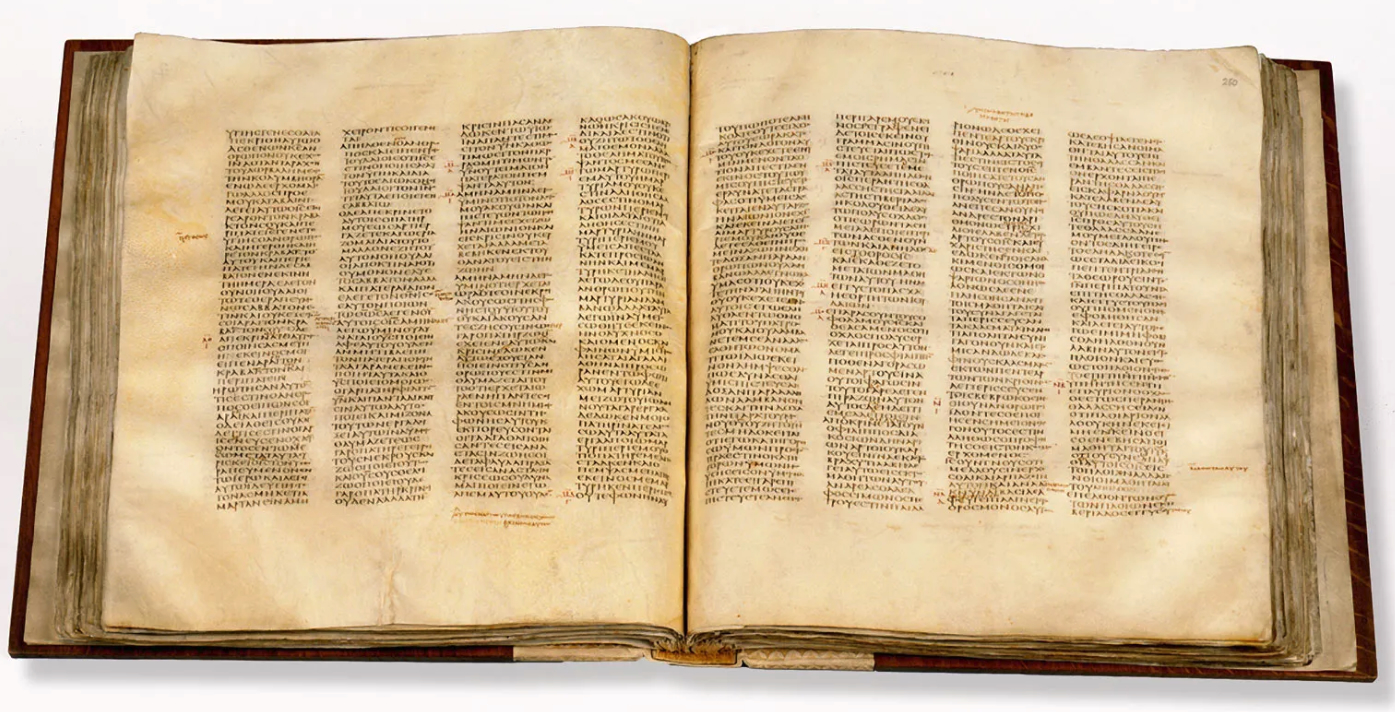
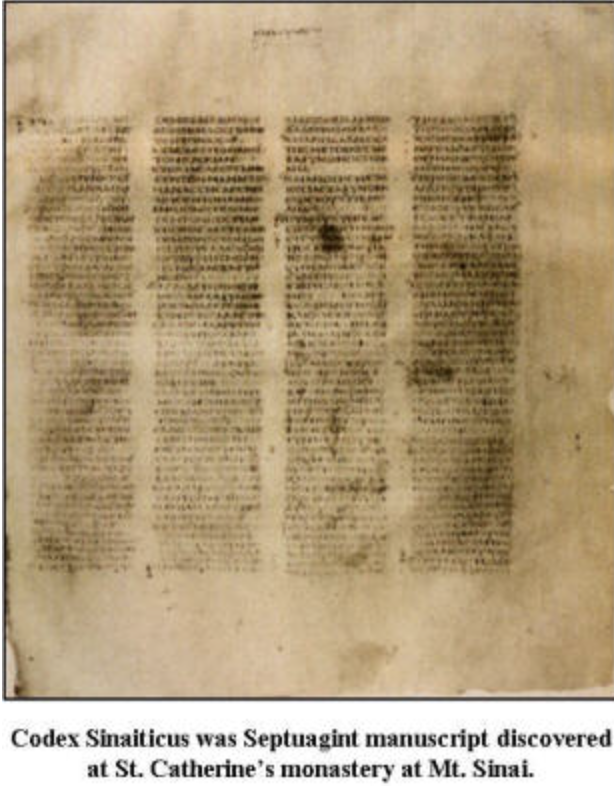
Christianity, meanwhile, only leaned into it further — the great uncial codices of the 4th and 5th centuries, Vaticanus and Sinaiticus, preserve the Septuagint as their Old Testament, and it remains the liturgical Old Testament of Eastern Orthodoxy to this day.
That divergence is exactly why the LXX still matters to textual scholars now. Wherever it disagrees with the Masoretic Text — the standard medieval Hebrew text underlying most modern Bibles — those differences aren't automatically translator error.
In several well-documented cases, Dead Sea Scroll fragments have shown that the Septuagint was translating from an older Hebrew source text that has since been lost, meaning the "Greek" reading sometimes preserves the more original Hebrew wording.
The Septuagint isn't just a historical curiosity; it's an active tool for reconstructing what the Hebrew Bible looked like before the manuscript tradition split.
Taken together — the legend of its founding, its adoption by the apostles, its startlingly direct treatment of the Nephilim, and its ongoing role in modern textual criticism — the Septuagint stands as far more than an old translation.
It's a window into how the earliest readers of scripture, Jewish and Christian alike, actually understood the text in front of them, long before centuries of later interpretation reshaped the conversation.
Click on the link below to view this edition of The Greek Septuagint at Amazon.com!
The Septuagint with Apocrypha: Greek and English
Back to The Greek Septuagint
Back to the Nephilim
Back to Home Page
Recent Articles


%2C%20were%20the%20men%20of%20renown%20and%20heros%20of%20old.%20These%20were%20the%20Greek%20gods%20and%20Titans%20-%20the%20Nephilim%20of%20the%20antediluvian%20age.)

-
Map of Ancient Mesopotamia: Early Empires of the Ancient Near East
Sep 07, 26 08:37 AM
 Discover the map of ancient Mesopotamia. Learn about early civilization, key historical empires, major cities, and trade routes along the Euphrates.
 -
The Tabernacle: God's dwelling place among Israel from Sinai to David.
Sep 04, 26 03:06 PM
 Discover the Tabernacle, God's dwelling place among ancient Israel, from its wilderness origins under Moses, to the Ark's arrival in Jerusalem under King David.
 -
Old Testament Maps & Geography: Interactive Biblical Maps
Aug 24, 26 09:42 PM
 Explore interactive Old Testament maps and historical geography. Trace ancient Israel's journeys, tribal boundaries, and biblical events with detailed charts.
Enoch & the Nephilim: Unexplained Mysteries of the Bible
Are you intrigued by these passages from Enoch and Genesis? Have you come across these questions before? Seeking answers and explanations of mysteries has been an endeavor of man since the earliest of times. Share your thoughts and questions on the Nephilim, Enoch, the Watchers, and other Bible mysteries!
What Other Visitors Have Said
Click below to see contributions from other visitors to this page...
Why no Nephilim today? 
If, indeed, fallen angels can have sex with women and produce some sort of divine/human creature(ie.,giants) - my question is why hasn't it continued over …
The Seer
With respect to your comments about the Nephilim. I am very familiar with that school of thought, and it is erroneous, along with the uncannonized lost …
Nephilim, sons of angels 
The Nephilim were born of human women, always male like a mule, and always sterile. The first angel to take a human wife may have been Kichunna of the …